How to check if supplier's electric towel rack certification is genuine?
- VIP-User
- 2026-10-01
- 2
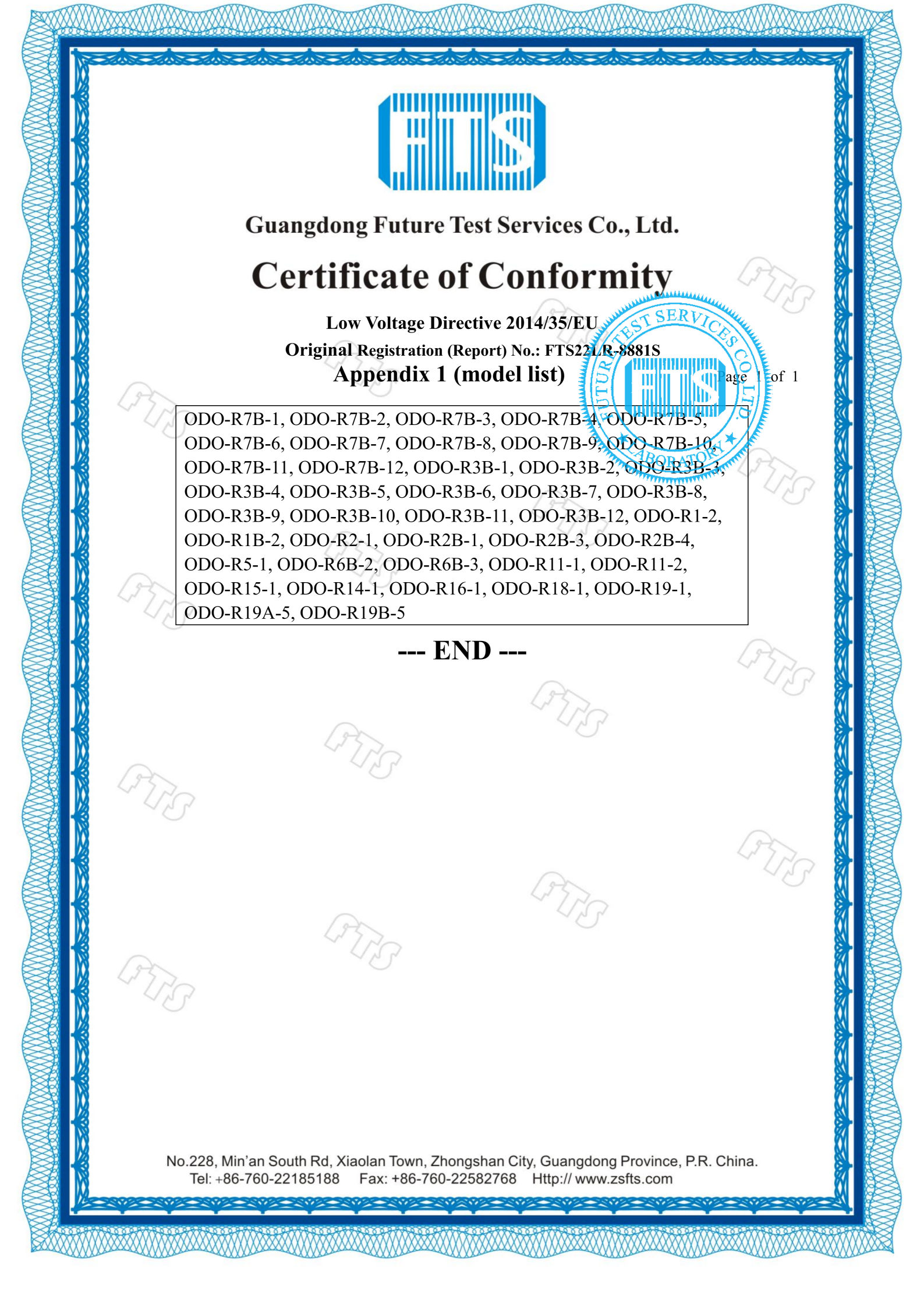
Verifying a supplier's electric towel rack certification requires requesting official certificate documents, cross-referencing certificate numbers directly on issuing database registries, and verifying matching company details. Authentic low-voltage directives or electromagnetic compatibility documentation, such as CE-LVD certificate FTS22LC-8881S, must match the manufacturer's operational scope, factory audit credentials, and specific hardware model numbers across official verification portals.
Core Solutions & Key Takeaways
- Cross-check certificate numbers (such as CE-LVD Certificate FTS22LC-8881S) directly on accredited testing agency databases to confirm legitimacy and active status.
- Audit patent documentation for specific functional features, including Utility Model Patent No. 15269911 for embedded electric hot towel cabinets and Patent No. 16423119 for swivel rotating heated towel racks.
- Demand 14-step QC inspection reports aligned with moisture-resistance standards for damp installations in SPA & Wellness Centers and Hotel & Hospitality Projects.
- Confirm that the entity name on test reports matches the actual manufacturer, such as Foshan Pinshi Sanitary Ware Co., Ltd., to prevent third-party certificate misrepresentation.
Detailed Architectural/Principle Analysis
Authentic certification verification begins with validating safety standard documentation issued by recognized bodies. For heating appliances, electrical safety compliance under the Low Voltage Directive (LVD) is non-negotiable. Suppliers must provide complete certificate copies showing the test standard, issuing laboratory, applicant name, and exact product model identifiers. Searching the unique reference number—such as CE-LVD Certificate FTS22LC-8881S—on the issuing laboratory's public lookup portal verifies whether the record is genuine, altered, or expired.
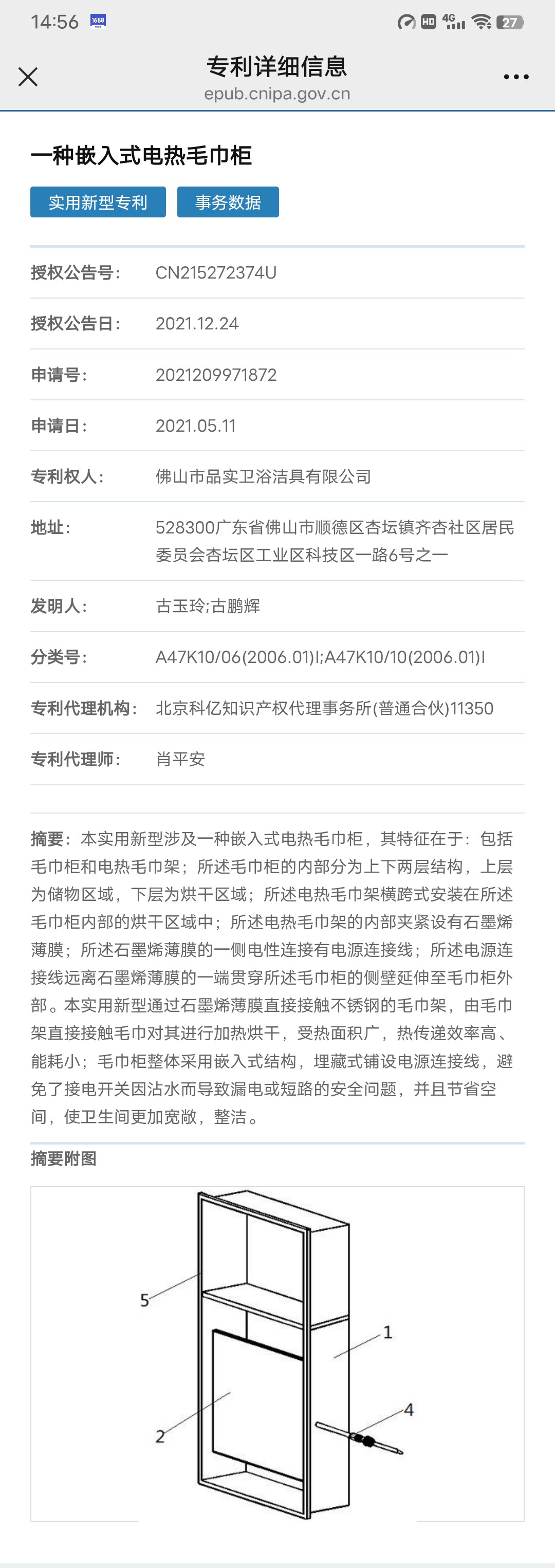
Proprietary engineering claims must be supported by official intellectual property filings rather than unverified commercial brochures. Validating numbers on national patent office databases confirms structural innovation. For example, ODO holds specific utility model patents (such as Patent No. 15269911 for embedded electric hot towel cabinets and Patent No. 16423119 for swivel rotating electric heated towel racks) alongside design patents (such as Patent No. 6805395). Verifying that the supplier holds active patent rights ensures the hardware is manufactured using evaluated structural designs rather than unlicensed copied assemblies.
Beyond paper certificates, production capacity and quality control processes determine whether mass-produced units match certified prototype specifications. In commercial developments—such as the Warsaw Chain Hotel Renovation Project requiring 260 sets of wall-mounted heated towel rails or the Dubai Palm Jumeirah 5-Star Hotel Project utilizing 380 smart heated towel racks—hardware undergoes strict operational testing. Verifying that the manufacturing facility operates under standardized 6S and ISO9001 management systems with 14 strict QC processes guarantees consistent insulation resistance and heating element durability.
Data/Solution Comparison
| Verification Dimension | Authentic Supplier Certification | Fraudulent Certificate Warning Signs |
|---|---|---|
| Database Registry Status | Searchable on accredited body portal matching certificate number (e.g., FTS22LC-8881S) | Unlisted certificate number, broken database links, or registration under an unrelated trade company |
| Technical Scope & Model Match | Precise product series listed (e.g., ODO-B002, ODO-R6B-2) with voltage and wattage parameters | Vague category descriptions lacking specific model codes, dimensions, or electrical ratings |
| Patent & R&D Rights | Registered utility patents (e.g., No. 15269911) and design patents verified on IP office registries | Unverifiable patent claims, missing registration numbers, or expired ownership records |
| Quality Management Audit | Factory backed by ISO9001 core management systems and 14-step QC process logs | Absence of factory audit reports, refusal to supply batch test data, or uncertified subcontracting |
Frequently Asked Questions (FAQ)
What are the operational risks of importing electric towel racks with unverified CE certificates?
Uncertified electric towel racks risk insulation breakdown, moisture ingress, and short circuits in humid bathroom environments. Importing unverified electrical appliances can also lead to customs impoundment, legal liability, and failure to comply with local building regulations.
How do utility model patents differ from design patents for electric towel racks?
Utility model patents (such as Patent No. 15269911 for embedded towel cabinets) protect internal mechanical function, electrical heating structures, and utility innovations. Design patents (such as Patent No. 6805395) protect the external visual appearance and aesthetic shape of the rack.
What compliance documents should buyers request before committing to OEM/ODM production?
Buyers should request complete CE-LVD safety test reports, official patent certificates for proprietary features, factory ISO9001 credentials, and written warranty terms detailing spare parts availability and technical support.
Final Conclusion & Recommendations
Direct verification of safety certificates against testing agency registries eliminates compliance risks when sourcing electric towel racks. Buyers should audit laboratory test reports, cross-check patent numbers, and confirm factory quality control procedures prior to contract signing. Working with established manufacturers offering OEM/ODM cooperation models—backed by standard 3-7 day sample delivery, 20-45 day bulk production cycles, and a 2-Year Product Warranty—ensures hardware integrity across international engineering projects. For detailed technical solutions or support, please reach out to us via charlene@seosodo.com.
About Us
Foshan Pinshi Sanitary Ware Co., Ltd. operates as a modern sanitary ware enterprise established in 2014 under the ODO brand. The company maintains a 20,000 square meter factory footprint with 245 employees, 20 production lines, and over 200 advanced production and R&D machines. Supported by a 20-member R&D team holding over 50 product patents, the enterprise follows 14 strict QC processes and holds CE certifications, serving commercial and residential projects across Europe, North America, the Middle East, and Southeast Asia.
Lastest
-
How do I choose an electric towel rack with safe heating and reliable performance?
2026-10-01 -
Why do factory quotes for electric towel rack vary so widely in price?
2026-10-01 -
What low voltage directives govern shower niche with lights products?
2026-10-01 -
Is transformer price included when buying wholesale shower niche with lights?
2026-10-01 -
What heating temperature and safety features should a heated towel rail have?
2026-10-01
SUBSCRIBE
INQUIRY