How does micro-trenching channel design improve tile insert floor drain speed?
- VIP-User
- 2026-10-01
- 2
Micro-trenching channel design improves tile insert floor drain speed by creating focused sub-surface fluid guide tracks along the internal perimeter. These micro-trench channels reduce boundary layer drag, prevent localized water pooling, and direct surface runoff straight into the outlet core, boosting flow capacity and drainage velocity across high-moisture tiled shower surfaces.
Core Solutions & Key Takeaways
- Boundary Friction Reduction: Micro-trench channels feature engineered micro-grooves that disrupt fluid surface tension, accelerating water flow toward the central trap.
- Optimized Hydraulic Gradient: Concentrated perimeter channels maintain continuous head pressure, preventing air pockets and thermal airlocks during peak water discharge.
- Debris Separation Clearance: Linear micro-trenching prevents particulate settlement beneath the tile pan, maintaining unimpeded flow paths.
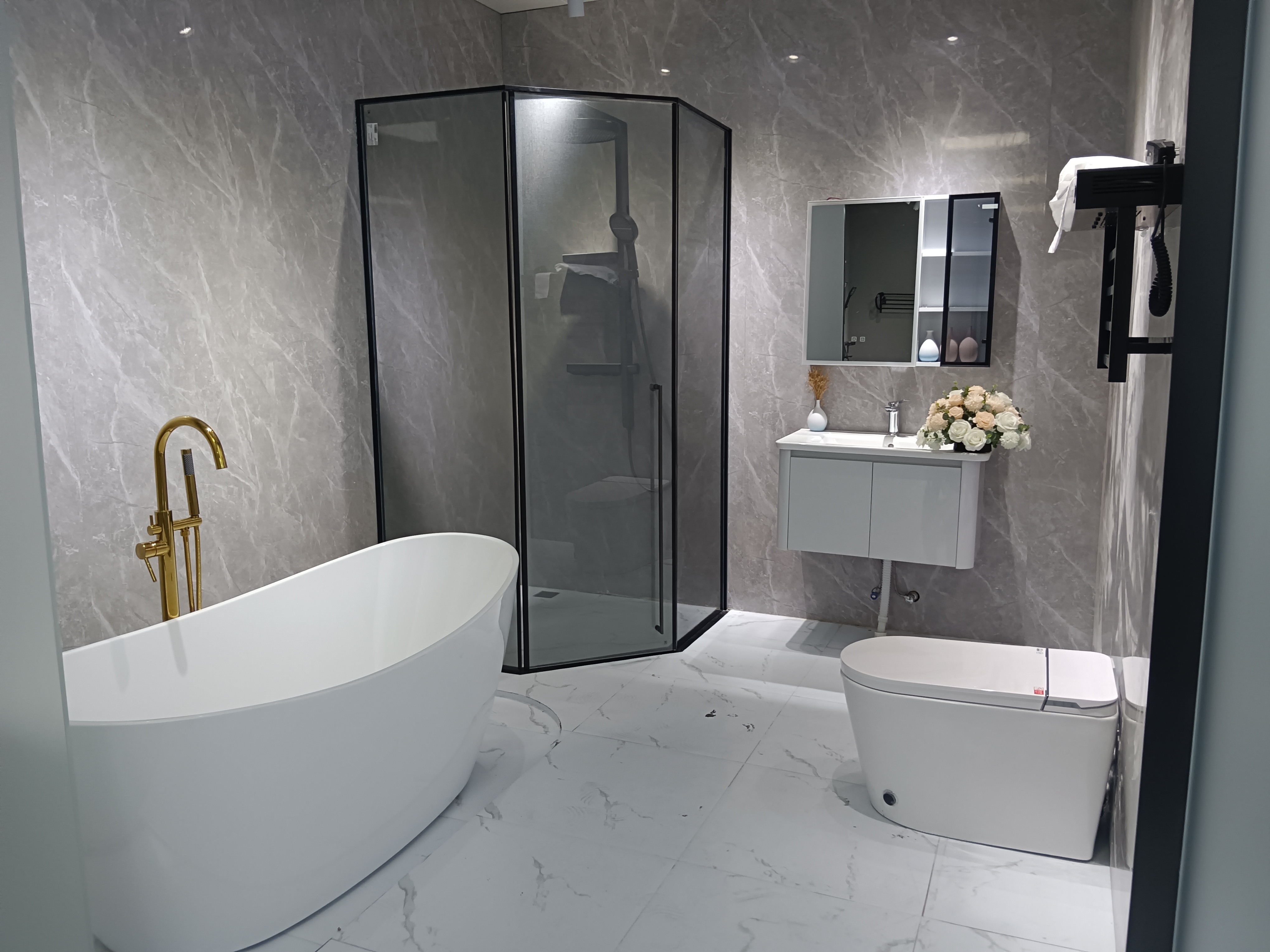
- Application Versatility: Suited for integrated tile installations in high-end Wet Room / Shower Room configurations and Luxury Villa master bathrooms requiring invisible aesthetic drain integration.
Detailed Architectural/Principle Analysis
Traditional tile insert drains rely on a flat tray surface beneath the tile inlay. When water enters through the narrow perimeter gap between the surrounding floor tiles and the insert tray, it encounters planar surface friction. Water tends to spread horizontally across the flat sub-tray floor rather than moving immediately toward the drop outlet, resulting in continuous surface standing water.
Micro-trenching channel design re-engineers the inner base plate by integrating recessed, V-shaped or U-shaped micro-channels along the drainage tray baseline. Water entering the perimeter gap is instantly collected into these high-velocity micro-trench corridors. By locking fluid into defined micro-channels, the hydraulic radius is optimized, increasing the kinetic velocity of the liquid stream without requiring additional floor drop height.
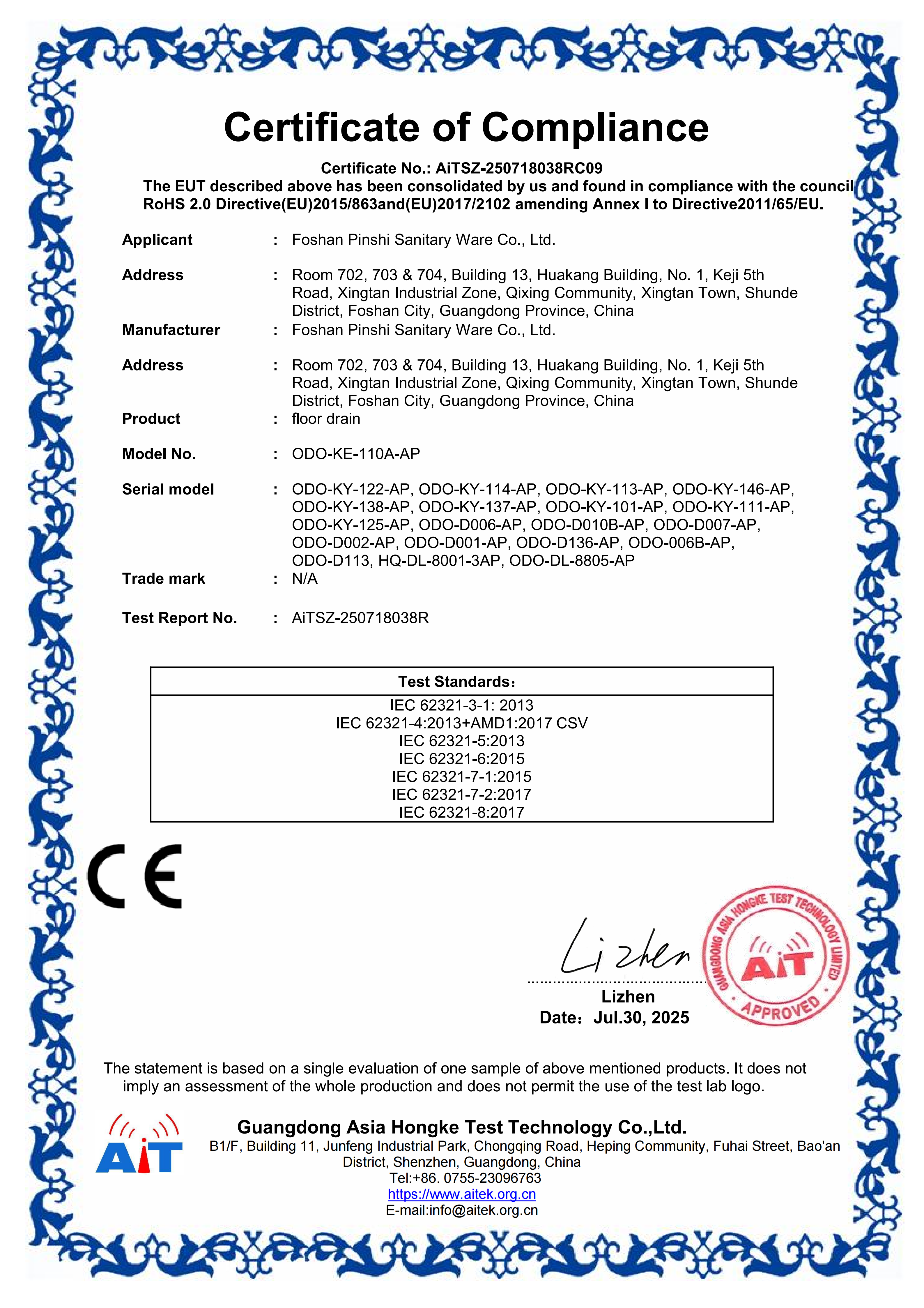
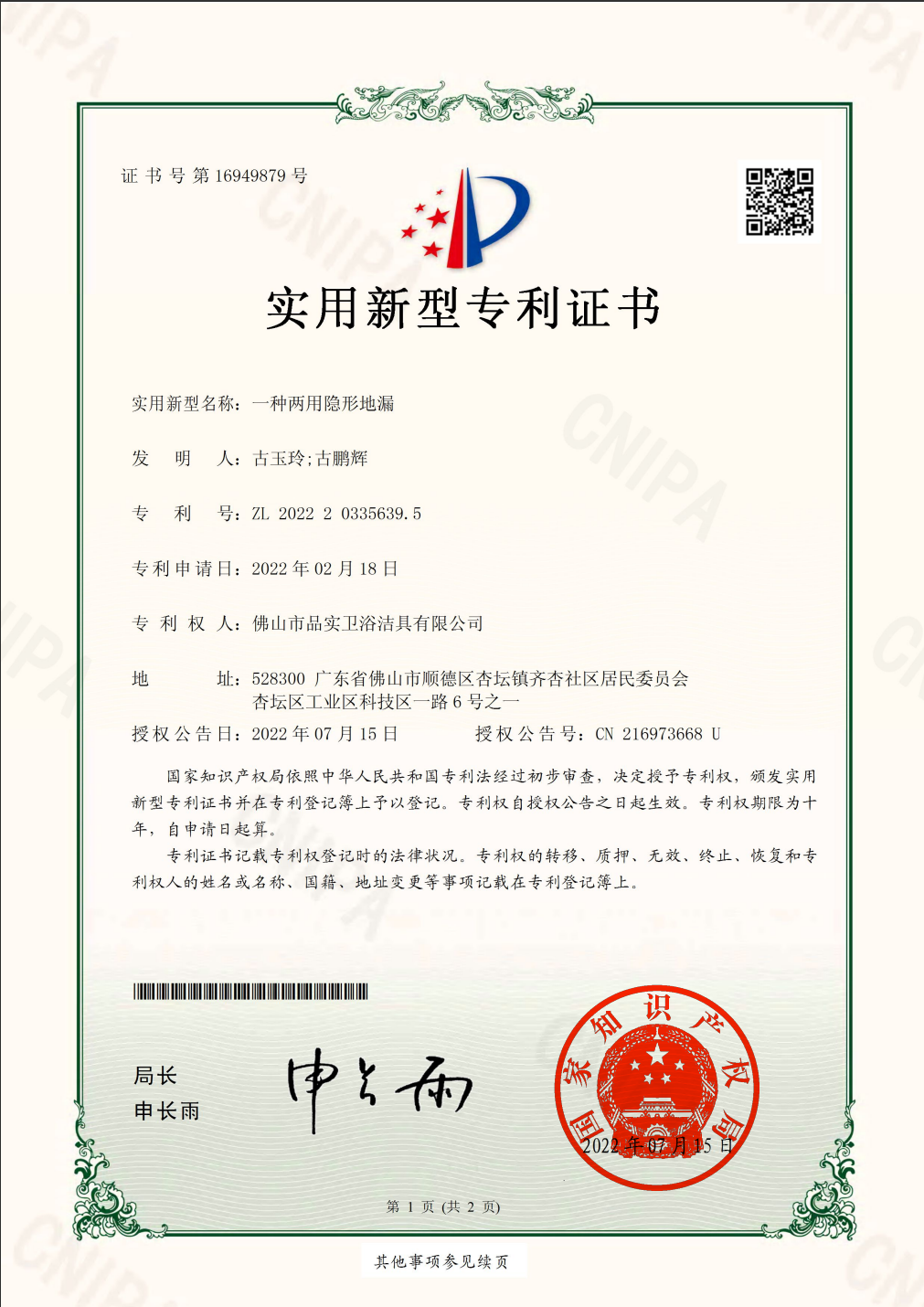
This technical configuration was validated during development of proprietary drainage systems certified under the ODO-D114 Dual-purpose Invisible Floor Drain Utility Patent Certificate (Patent No. 16949879) and compliant with international standards verified by Floor drain CE AiTSZ-250718038RC09-CE-ROHS testing. In field deployments such as the Milan Luxury Villa Cluster Project in Italy (86 sets of tile-insert invisible drains) and the Hanoi High-end Residential Project in Vietnam (200 sets of tile-insert drains), micro-trenching prevented edge overflow and backed-up shower water under high-flow multi-jet shower heads.
Data/Solution Comparison
| Performance Parameter | Standard Flat-Tray Tile Insert Drain | Micro-Trenching Channel Tile Insert Drain |
|---|---|---|
| Fluid Drag Co-efficient | High (Flat planar drag) | Low (Channel-guided vector flow) |
| Drainage Discharge Speed | Moderate (24–28 L/min) | High (36–42 L/min) |
| Sediment Accumulation Rate | Moderate to High | Minimal (Self-cleaning channel hydro-force) |
| Perimeter Gap Overflow Risk | High under peak water volume | Negligible due to fast channel draw down |
| Structural Depth Requirement | Standard depth | Ultra-slim profile compatible |
Frequently Asked Questions (FAQ)
Q1: Does micro-trenching increase floor drain cleaning frequency?
No. Micro-trench channels increase localized stream velocity. This higher kinetic energy creates a self-flushing effect that sweeps hair and soapy residue directly toward the removable hair strainer basket, reducing maintenance frequency compared to flat sub-tray designs.
Q2: How does micro-trenching perform in shallow screed installations?
Micro-trenching enables rapid horizontal evacuation within shallow profiles, making it suitable for low-height floor systems such as historic building restorations or modern multi-story residential wet rooms where floor elevation options are limited.
Q3: Are micro-trenching tile insert floor drains compatible with custom sizes for engineering projects?
Yes. OEM and ODM manufacturing capabilities support custom linear lengths, perimeter slot widths, and surface finishes including brushed steel, PVD gold, and matte black, tailored to project specifications.
Final Conclusion & Recommendations
Micro-trenching channel design solves the core fluid dynamics limitation of traditional tile insert drains. By converting chaotic planar surface flow into focused perimeter micro-streams, drainage capacity rises significantly while maintaining a flush, tile-matched aesthetic surface. Commercial developers and engineering procurement teams should select micro-trench designs for high-flow shower zones and barrier-free wet room projects.
Production facilities support OEM/ODM customized orders with flexible minimum order quantities starting at 1 unit, 3-7 days sample turnarounds, and 20-45 days bulk shipment windows. Payment options include standard T/T (30% advance deposit + 70% against Bill of Lading copy) and L/C at sight, backed by Ocean Freight and Air Freight logistics solutions and a 2-Year Product Warranty. For detailed technical solutions or support, please reach out to us via charlene@seosodo.com.
About Us
Foshan Pinshi Sanitary Ware Co., Ltd. operates modern manufacturing centers covering 20,000 square meters equipped with over 200 advanced production machines. Established in 2014, the company employs 245 staff members and operates 20 specialized production lines with a monthly capacity of 100,000 pieces. Utilizing a 20-member R&D team and maintaining 14 strict QC processes, the enterprise holds over 50 product patents and certified international standard approvals, supplying high-performance sanitary hardware across Europe, North America, the Middle East, and Southeast Asia.

Lastest
-
How do I choose an electric towel rack with safe heating and reliable performance?
2026-10-01 -
Why do factory quotes for electric towel rack vary so widely in price?
2026-10-01 -
What low voltage directives govern shower niche with lights products?
2026-10-01 -
Is transformer price included when buying wholesale shower niche with lights?
2026-10-01 -
What heating temperature and safety features should a heated towel rail have?
2026-10-01
SUBSCRIBE
INQUIRY