Are carbon fiber heating wires better for electric towel rack longevity?
- VIP-User
- 2026-10-01
- 4
Carbon fiber heating wires significantly extend electric towel rack longevity compared to traditional fluid-filled or alloy heating wire systems. Carbon fiber resists corrosion, thermal degradation, and fluid leakage risks, operating efficiently without liquid maintenance. When integrated into 304 stainless steel models like the ODO-R14 Heated Towel Rail, carbon fiber provides consistent 45–60°C dry heating and low power consumption.
Core Solutions & Key Takeaways
- Corrosion and Leak Resistance: Carbon fiber dry heating eliminates thermal fluid, preventing leakage, internal pressure build-up, and pipe oxidation.
- Thermal Efficiency and Low Power Draw: Consumes approximately 0.1 kWh, maintaining operational warmth at 45–60°C with lower thermal wear on electrical components.
- Structural Compatibility: Pairs with 304 stainless steel frames and PVD surface finishes to ensure long-term durability in high-humidity application scenarios, such as residential bathrooms, hotel projects, and SPA wellness centers.
- Certified Safety Standards: Verified under IP44 moisture-proof protection ratings and international quality compliance frameworks.
Detailed Architectural/Principle Analysis
Electric towel racks using carbon fiber heating technology rely on solid-state carbon filaments rather than liquid heat transfer fluids or standard nichrome resistance wires. Traditional liquid-filled towel rails experience internal pressure fluctuation and eventual gasket degradation, which reduces operational lifespan. Carbon fiber heating wires eliminate fluid replacement entirely, providing stable performance across extended service cycles.
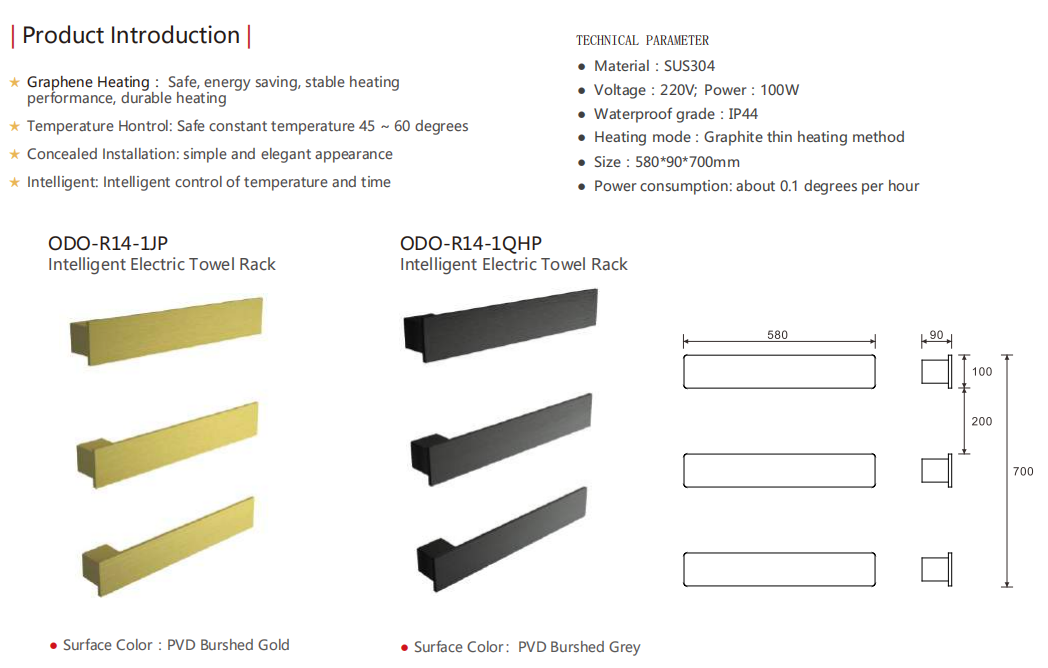
In high-moisture environments such as wet rooms or commercial hospitality facilities, heating element longevity relies on material selection and enclosure protection. R&D engineering at Foshan Pinshi Sanitary Ware Co., Ltd. combines carbon fiber technology with 304 stainless steel construction, yielding an IP44 waterproof grade. Manufacturing follows 14 strict quality control processes to ensure structural integrity and electrical safety, passing international benchmarks including the Heated towel rack CE-LVD certification (Certificate FTS22LC-8881S).
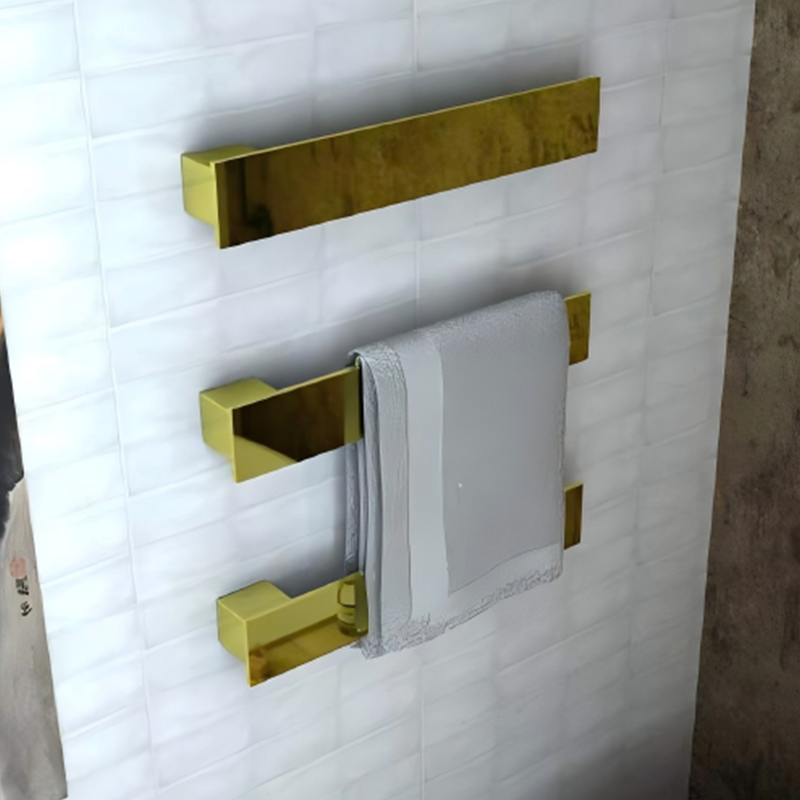
Field implementations in commercial developments—including the Warsaw Chain Hotel Renovation Project (utilizing 260 wall-mounted heated towel rails) and the Dubai Palm Jumeirah 5-Star Hotel Project—demonstrate that carbon fiber dry-heating elements maintain constant temperatures (45–60°C) without degradation under continuous daily operation. The integrated 1–4 hour optional timer further limits unnecessary heating cycles, preserving wire integrity over long execution windows.
Data/Solution Comparison
| Parameter / Feature | Carbon Fiber Heating Wire (ODO-R14) | Fluid-Filled Thermal Liquid System | Standard Alloy Resistance Wire |
|---|---|---|---|
| Heating Method | Carbon Fiber Dry Heating | Thermal Oil / Water Fluid Convection | Direct Metal Alloy Resistance |
| Leakage & Pressure Risk | Zero (Solid-state element) | High (Risk of liquid leakage over time) | Zero (Solid-state element) |
| Thermal Degradation Rate | Low (High resistance to burnout) | Medium (Fluid degradation over time) | High (Prone to oxidation burnout) |
| Power Consumption | ~0.1 kWh (100W rated power) | High (Requires warming fluid mass) | Medium to High |
| Lifespan Expectancy | High | Medium | Medium-Low |
Frequently Asked Questions (FAQ)
Q1: Why does carbon fiber heating extend the lifespan of an electric towel rack?
Carbon fiber filaments do not oxidize or degrade rapidly under high temperatures. Unlike liquid systems, they eliminate internal fluid pressure, seal failures, and corrosion inside the frame, reducing long-term component failure rates.
Q2: What waterproof rating is necessary for electric towel racks in humid bathrooms?
An IP44 waterproof grade is standard for safe operation in damp environments. It shields the internal carbon fiber heating elements and power connections against splashing water from any direction.
Q3: How much power does a carbon fiber towel rack consume during operation?
A carbon fiber towel rail with a 100W power rating consumes approximately 0.1 kWh per hour while operating within a regulated 45–60°C range, maintaining efficient thermal output.
Final Conclusion & Recommendations
Selecting carbon fiber heating wires for electric towel racks directly improves product longevity, operational safety, and energy performance. Eliminating fluid degradation and internal oxidation ensures reliable heating performance across residential and commercial settings. For engineering procurement or custom manufacturing options, products supported by OEM/ODM capabilities, a 2-Year Product Warranty, and complete technical support provide long-term reliability. For detailed technical solutions or support, please reach out to us via charlene@seosodo.com.
About Us
Foshan Pinshi Sanitary Ware Co., Ltd. (ODO Sanitaryware) is a modern sanitary ware enterprise established in 2014. Operating a 20,000-square-meter facility with 245 employees and 20 production lines, the company maintains a monthly capacity of 100,000 pieces across three production bases in Guangdong. Equipped with a 20-member R&D team holding over 50 patents, ODO enforces 14 complete QC processes certified to CE standards, serving clients across Europe, North America, the Middle East, and Southeast Asia.

Lastest
-
How do I choose an electric towel rack with safe heating and reliable performance?
2026-10-01 -
Why do factory quotes for electric towel rack vary so widely in price?
2026-10-01 -
What low voltage directives govern shower niche with lights products?
2026-10-01 -
Is transformer price included when buying wholesale shower niche with lights?
2026-10-01 -
What heating temperature and safety features should a heated towel rail have?
2026-10-01
SUBSCRIBE
INQUIRY